
A BSc Nursing qualification can be the beginning of several professional directions, but career planning becomes more useful when students investigate the work performed in specific settings. Searching for career options after BSc Nursing may produce long job lists without explaining what an ICU nurse, community health nurse or postgraduate learner actually does. The important question is which pathway matches your skills, interests and the eligibility conditions of real employers or universities.
This article focuses on three directions: acute hospital care, community-based nursing and further education. It does not promise immediate recruitment, a fixed salary or automatic eligibility for a specialist title after graduation.
1. Start with qualification and registration requirements
Completing a course is only one part of professional readiness. Nursing roles may require a recognised qualification, appropriate State Nursing Council registration and other conditions specified by the employer. Check your actual registration status before describing yourself as authorised for a role.
The Indian Nursing Council publishes nursing education standards and programme information. Recruitment notices and professional practice rules remain important separate sources. Students should also prepare accurate academic records, evidence of supervised clinical learning where required and a clear resume. Avoid adding practical skills to your resume that you have only watched someone else perform.
2. Understand nursing work in intensive care
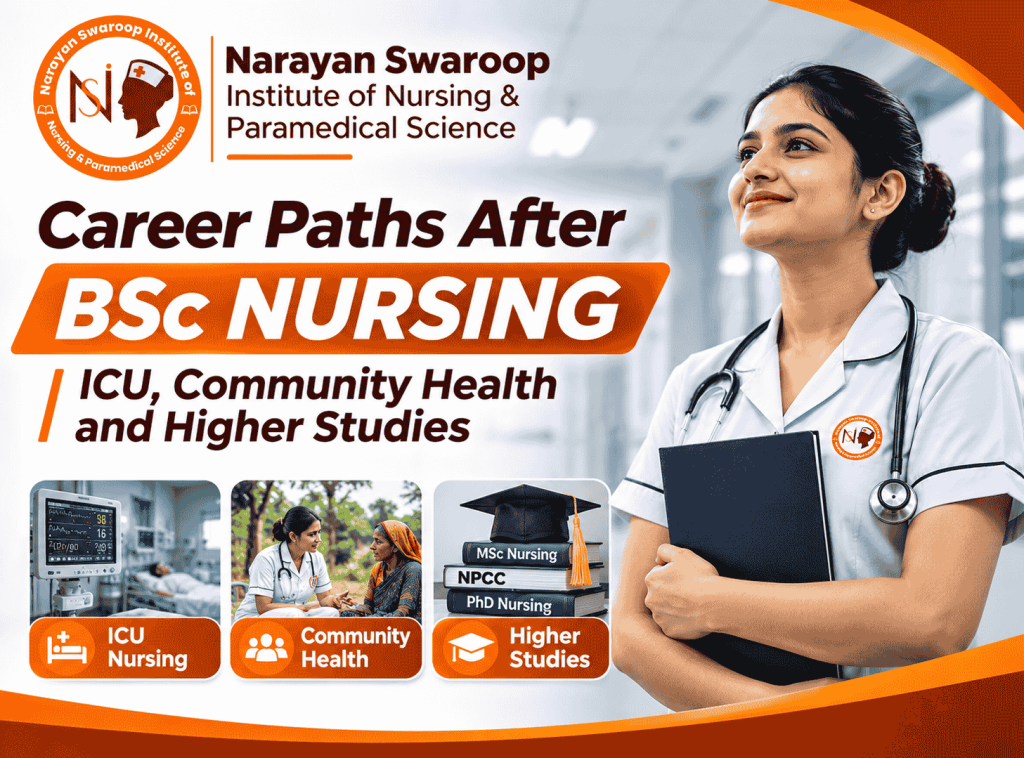
Intensive care units look after patients who need close monitoring and coordinated clinical support. Nurses work within a multidisciplinary team and must follow established clinical protocols. The environment can involve urgent changes, careful documentation, equipment awareness and rapid communication with authorised clinicians.
ICU nursing is not simply ‘ordinary nursing with more machines’. It requires attention to patient safety, teamwork, appropriate supervision and often additional workplace training. A new graduate should check whether an employer provides structured orientation before expecting them to work in a complex unit. Never claim competence in specialist procedures without appropriate training and authorisation.
3. Consider medical-surgical and general ward roles
General wards can provide important opportunities to strengthen clinical observation, communication, documentation and teamwork. Nursing responsibilities may cover multiple patients with different needs, making organisation and clear handovers essential.
These settings teach the importance of prioritising tasks appropriately and recognising when a patient’s condition changes. They also require respectful communication with patients and families. Students should not dismiss general ward experience as less valuable than highly specialised departments. The skills developed may be relevant across many nursing pathways, though progression depends on experience and employer requirements.
4. Explore community health nursing
Community health nursing focuses on people, families and communities outside a single hospital ward. Work can involve health education, preventive services, follow-up and coordination with public-health systems. The exact responsibilities depend on the role and programme.
Students who enjoy education, outreach and communication with diverse communities may find this pathway meaningful. It can require travel, documentation, local-language skills and sensitivity to social conditions. Do not assume every community nursing job is an indoor office position or that it follows the same hours as a hospital shift. Review actual job descriptions and public-sector recruitment rules.
5. Look at maternal, child and mental health settings
Nursing graduates may encounter work in maternity services, child health and mental health teams, depending on eligibility, staffing arrangements and additional training. Each field requires specific knowledge and communication skills.
For example, paediatric nursing involves adapting explanations to children and families. Mental health settings require respectful communication, observation and safeguarding within professional boundaries. Maternal health involves coordinated care around pregnancy and childbirth within the relevant service. These examples illustrate possible interests, not guaranteed postings after graduation or authority to practise beyond one’s competence.
6. Plan for MSc Nursing or other further study
Graduates interested in teaching, research or advanced academic development may investigate postgraduate nursing programmes. The INC’s published MSc Nursing eligibility criteria include the relevant nursing degree, registration, prescribed marks and work-experience provisions, with details that can differ by applicant pathway.
Check the official INC eligibility criteria and the receiving university’s current admission rules. Do not assume that earning BSc Nursing automatically grants entry to any master’s programme or makes someone eligible for a faculty position. Higher education is an investment of time and money that should match a specific professional objective.
7. Build a skill-based development plan
Choose one area you want to explore and make a six-month learning plan. Identify required professional registration, workplace competencies, communication skills and learning resources. Ask qualified educators or supervisors what new graduates commonly need to improve.
For hospital roles, accuracy in observation and handover can be useful development areas. For community roles, consider public-health communication and documentation. For postgraduate study, strengthen academic reading and writing. Keep a record of legitimate courses and supervised experiences. A collection of unrelated online certificates will not replace required professional qualifications.
8. Evaluate job advertisements critically
Read the minimum qualification, registration, experience, location and duty requirements of each vacancy. A job title alone may conceal shift work, contractual conditions or a specialist requirement. Compare several authentic vacancies before deciding which skills are worth developing.
Do not trust social-media promises of guaranteed government positions, high salaries or instant overseas licensing. Overseas practice has separate immigration, examination and registration rules. If recruitment requires an application fee, verify the employer or authorised agency carefully. A realistic career plan should include a backup option and room for changing interests.
9. Connect course learning with future choices
During your degree, pay attention to how subjects and supervised placements affect your interests. A student who enjoys community visits may be drawn to public-health roles. Another who likes structured ward communication may explore hospital practice. It is normal for preferences to change after genuine exposure.
The institute’s four-year BSc Nursing course overview) outlines teaching across different nursing areas. Talk with faculty about appropriate training expectations, not merely the most fashionable specialty. Every pathway requires continuing professional learning.
Frequently asked questions
Can a fresh BSc Nursing graduate work in ICU?
Eligibility and supervision depend on the employer and role. Structured orientation and additional competencies may be required.
Is community health nursing only about awareness campaigns?
No. Roles can involve multiple preventive, educational, coordination and follow-up responsibilities depending on the service.
Does a BSc Nursing degree guarantee an MSc seat?
No. Entry depends on the applicable eligibility, examinations, experience and seat availability.
Explore the degree pathway
Students can review the BSc Nursing programme) and enquire about admission requirements. Choose a course for the professional learning it offers, then build a career plan around verified qualifications and real responsibilities.