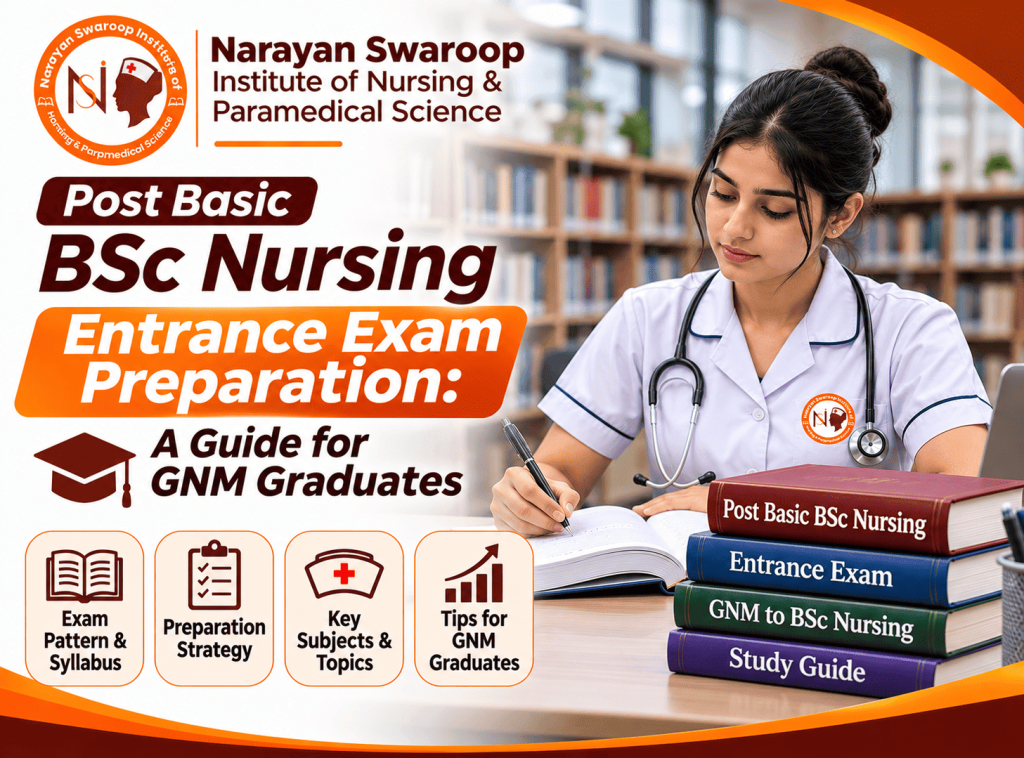

For a GNM-qualified nurse, preparing for further nursing education is different from preparing immediately after Class 12. Post Basic BSc Nursing entrance exam preparation should use your existing nursing knowledge while checking the academic and registration documents required for the next qualification. Your clinical experience may support understanding, but it does not replace structured revision or the university’s current admission requirements.
The Indian Nursing Council lists Post Basic BSc Nursing as a two-year regular programme, with a separate three-year distance-mode structure. Availability and permission for a particular delivery mode must be verified. ABVMU listed the programme under CNET in 2026; a later cycle must be checked independently.
1. Confirm eligibility before studying exam topics
The INC eligibility guidance refers to a recognised higher-secondary or equivalent qualification, a GNM certificate and registration as a registered nurse and registered midwife with a State Nursing Registration Council, subject to the specified provisions. The exact admission notification may add documentation or other requirements.
Start by checking that your name matches across GNM records, registration certificate and identity documents. If your council registration is pending, confirm the current rule with the admissions authority instead of assuming you can submit it after counselling. Use the INC eligibility page as a regulatory reference, then read the applicable university bulletin in full.
2. Identify the correct examination route
ABVMU’s nursing admission page displayed CNET 2026 for Post Basic BSc Nursing alongside other programmes. This does not establish the same question pattern, eligibility or timetable for the next cycle.
Download the bulletin for your intended admission year and list the exam sections, marks, duration, negative-marking rule if any, examination city information and counselling process. Treat older entrance guides as supplementary study materials. If a coaching advertisement does not cite a current bulletin, do not rely on it for deadlines or promised topics.
3. Make your GNM knowledge the foundation
Revisit the nursing subjects you already studied rather than approaching every topic as completely new. Organise broad areas from your approved syllabus, such as nursing foundations, medical-surgical nursing, maternal and child health, community health and mental health, where these correspond to the official entrance requirements.
For each topic, write a short explanation of its core principles before answering questions. Ask why a nursing action is appropriate, what observations matter and which decisions require escalation. This approach tests reasoning as well as memory. Do not substitute outdated ward habits for current approved educational content, and keep actual patient care within your professional scope and employer protocols.
4. Diagnose strengths and weak areas honestly
A GNM graduate may feel confident in areas encountered regularly during clinical work but less comfortable with subjects not used recently. Take a short topic-based diagnostic test aligned with the published syllabus. Sort errors into forgotten theory, misunderstood concepts, question-reading mistakes and time pressure.
This distinction helps you use your time effectively. If your answer is wrong because you rushed, repeat a timed exercise. If it is wrong because you do not understand the concept, return to a reliable textbook or faculty-approved reference. Keep a dated revision log rather than judging your readiness from confidence alone.
5. Study around a working nurse’s schedule
Candidates already employed in healthcare may have rotating duties and limited uninterrupted time. Instead of insisting on a rigid daily three-hour timetable, create a flexible weekly target. Choose short revision blocks after manageable shifts and longer mock sessions on scheduled days off.
A practical sequence is concept revision, active recall, questions and error review. During a 60-minute session, you might spend 20 minutes explaining a topic, 25 minutes solving questions and 15 minutes correcting mistakes. On demanding duty days, a shorter review is acceptable. Sleep, safe work performance and professional responsibilities must not be compromised by unrealistic entrance preparation plans.
6. Use clinical experience carefully in answer reasoning
Experience can help candidates connect concepts to situations, but examination answers should follow authoritative learning material and the applicable question. For example, a question about communication may test patient dignity, documentation or escalation rather than a habit you observed in one workplace.
When practising case questions, separate what you know from what the question actually states. Avoid importing facts not provided. Identify the safest response within the scenario and the appropriate professional role. If you are uncertain, discuss the reasoning with a qualified educator rather than learning a questionable answer simply because it appears in a popular online answer key.
7. Prepare documents and counselling information early
Keep your GNM qualification documents, council registration proof, Class 12 or equivalent records, identity documents and applicable certificates ready. The current bulletin may specify additional items, sizes or validity periods. Do not upload private documents to unfamiliar consultancy portals.
Track registration, correction, admit card, examination, result and counselling information separately. Confirm whether your preferred institution participates in the relevant process and whether the selected programme is eligible for your admission route. A college enquiry is not the same as entrance registration or counselling choice filling.
8. Know what the next degree is for
Post Basic BSc Nursing helps eligible GNM-qualified nurses undertake degree-level study. It is not merely a shorter version of every subject from basic BSc Nursing. Depending on the approved curriculum, further study can address nursing education, administration, research-related learning and broader professional knowledge.
Read our existing BSc Nursing after GNM guide for a course-pathway discussion. This article focuses specifically on preparing for the entrance and application process, so the two pages serve different search needs.
Frequently asked questions
Is GNM completion enough for admission?
Not on its own. Applicable higher-secondary, nursing registration, fitness and current university requirements must be met.
Does professional experience guarantee a higher entrance score?
No. Experience may support understanding, but performance depends on knowledge of the tested syllabus and examination technique.
Can I assume a 2026 entrance date applies next year?
No. Wait for the official bulletin for the relevant admission cycle.
Plan your next academic step
Explore the institute’s two-year nursing degree pathway) and send a course enquiry for current programme information. Confirm the official exam route separately. The strongest preparation plan combines verified eligibility, structured revision and careful management of documents.