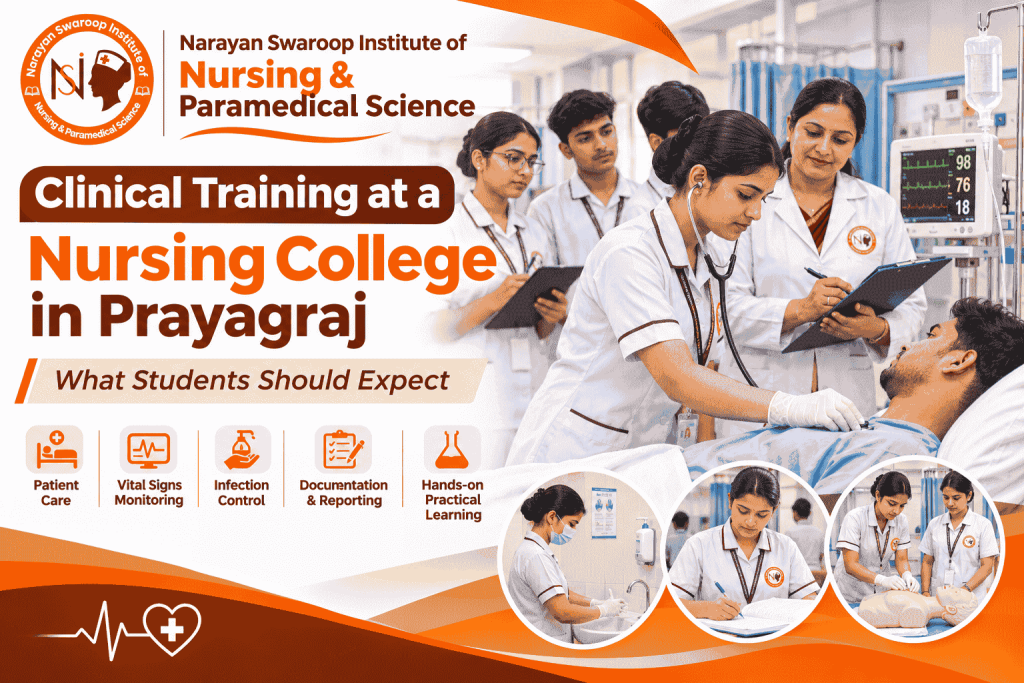

Choosing a nursing college in Prayagraj is an important decision for students planning to build a career in healthcare. Along with classroom education, clinical training plays a vital role in helping students develop practical nursing skills, understand patient care procedures, and gain experience in supervised healthcare environments. Though classroom learning is vital for imparting medical knowledge to the students, clinical training allows the students to learn about the application of such knowledge in practice.
Clinical training refers to a practical process in which nursing students learn all about patient care, basic medical techniques, communication skills, and other aspects under the supervision of an expert.
It becomes easy for those students who intend to join the Nursing Institute in Prayagraj if they know all about clinical training before taking admission into any college.
The below guide will help students learn about the details of practical training in the nursing institute.
What Is Clinical Training in Nursing Education?
Clinical Education is associated with practical education whereby the learners have a chance of applying the knowledge that they have acquired in practice.
Instead of studying through books the way patients are taken care of, they will get a chance to watch how the healthcare practitioners do things and will get trained according to the procedures so that they can gain enough competence to perform the duties of nurses.
Clinical Education will depend on:
The structure of clinical training depends on several factors, including:
- Type of nursing programme
- Student’s academic level
- Approved clinical training facilities
- Curriculum requirements
- Learning objectives and clinical competencies
Why Clinical Training Matters at a Nursing College in Prayagraj
A Nursing College in Prayagraj is expected to ensure that students comprehend scientific and practical aspects of nursing.
In-class sessions teach the science, while practical sessions teach students how healthcare professionals apply these scientific concepts when attending to their patients.
For instance, students can be taught in classroom sessions about blood pressure. Students will know how to take measurements and report any unusual readings through the practical approach.
Practical sessions also inform students that nursing entails patience, teamwork, responsibility, and patients’ respect.
Developing Confidence Through Practical Experience
It is normally difficult for students to adapt to the healthcare environment.
Clinical training gives the students exposure to equipment, patients, and the working environment.
The process should be conducted under proper supervision after training of the students.
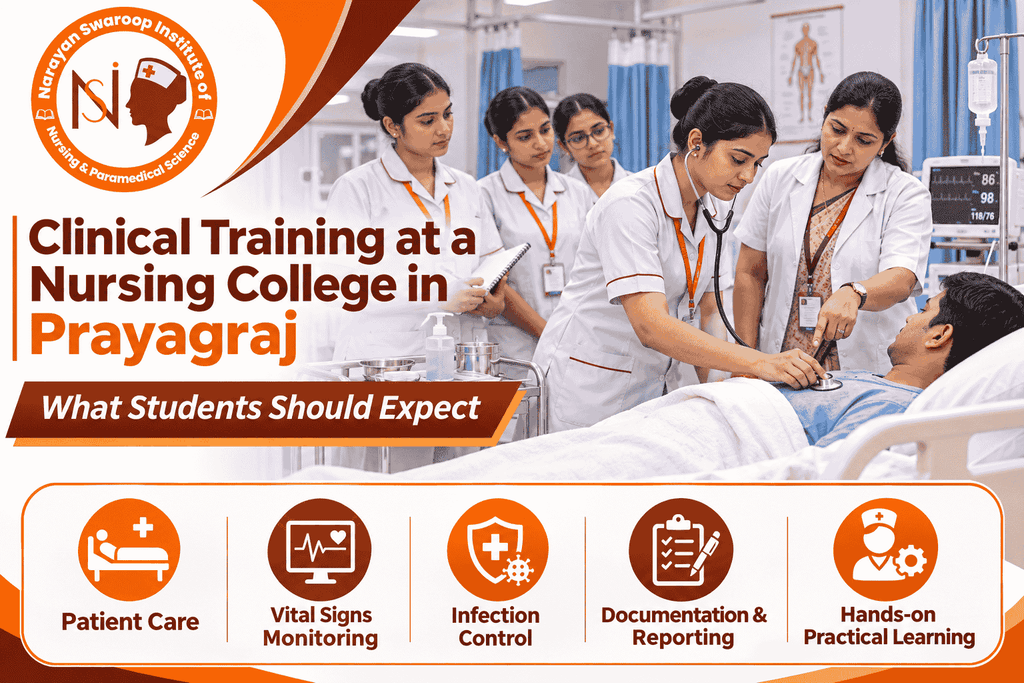
What Students Learn During Clinical Training
The Ideal Nursing Training Institute in Prayagraj is the institute which can provide you practical experience which will suit your particular program according to the approval of their nursing programs.
Clinical training of nursing students includes:
1. Patient Care
The role of nurses in assisting the patients in doing tasks associated with health care are trained in this aspect.
It includes assistance in hygiene, position, comfort, and change which should be reported to the supervisor.
2. Vital Signs Monitoring
Vital signs are critical indicators which help the health care practitioners in assessing the condition of the patient.
Vital signs monitoring includes:
- a. Blood pressure
- b. Heart rate
- c. Respiratory rate
- d. Body temperature
- e. Oxygen saturation
3. Infection Control and Hygiene
One more topic which should be mentioned is the topic of infection control.
The students receive knowledge on hygiene, the use of the personal protection equipment, waste management and the issues of infection prevention.
Strict adherence to the principles of infection control prevents any possible complications during the training of the patients, students and other health care specialists.
4. Working with Patients
One more role which the nurse performs is the working with the patients of various ages and nationalities.
The students learn how to listen to the patients carefully, to communicate properly, to keep confidentiality of the information and to explain the process of the treatment.
5. Documentation
Documentation is an essential part of nursing practice. During clinical training, students learn how to record patient observations, maintain accurate nursing records, and report relevant information to their supervisors. Proper documentation supports communication among healthcare professionals and helps maintain continuity of patient care.
Where Does Nursing Clinical Training Take Place?
The students are educated on the problems of documentation.
Clinical education can occur in the nursing laboratory, hospital settings and in other approved educational environments.
| Training Environment | What Students May Learn |
| Nursing Skills Laboratory | Basic procedures using models and equipment |
| General Hospital Ward | Routine patient care and observation |
| Community Health Setting | Health education and preventive care |
| Maternal and Child Health Unit | Basic mother and child care concepts |
| Emergency or Critical Care Unit | Observation of urgent care and monitoring practices |
Clinical experience differs depending on the course level, semester, and approved clinical training program.
It is advisable for students to verify the location of the training site from the institution.
How Clinical Training Progresses During a Nursing Course
This type of skill is often acquired through the information that is learned by the students.
Stage One: Acquiring Basic Skills
In this stage, the students acquire basic skills like those of nursing practices, hygiene, safety, and patient assessment skills.
These skills are acquired without having to carry out any procedure on the patients in the skill laboratories.
Stage Two: Participation in Ward Activities
In the second stage, the students participate in ward activities and observe the patients.
Stage Three: Preparedness for the Profession
In the final stage, the students learn how to cope with their roles and interact with other health care professionals.
Clinical Learning Is Dependent on the Qualifications of the Nurses and the Curriculum They Pursue.
What Makes a Nursing Education Institute in Prayagraj Suitable for Practical Learning?
When selecting an appropriate Nursing Education Institute in Prayagraj, the student should take into account the structure and quality of practical education rather than believing what is being told just for marketing.
These parameters need to be kept in mind while making your selection:
- Professional instructors of clinical subjects.
- Well-planned schedule of practical classes as per the syllabus.
- Clinical facilities for practicing in the program.
- Skills lab for practice with supervision.
- Safety training and infection control training.
- Evaluation and constructive feedback.
In addition to this, the institute should have proper recognition.
Challenges Students May Face During Clinical Training
Learning knowledge through clinical practice is indeed fascinating; however, some amount of adaptation may be needed.
This is because there are those who find it hard to interact with their patients, understand the medical language, or connect theory with practice.
Sticking to a schedule, seeking direction from your teachers, and having good communication skills will make learning easy for you.
In addition to this, one must treat their patients politely, conduct themselves in a professional manner, and not try things blindly.
Questions to Ask Before Taking Admission
Prior to enrolling in any nursing program, the following queries must be made by both the student and his/her parents:
- What clinical skills will be learned in the program?
- Where do the practical classes take place?
- How is supervision and evaluation of the students provided?
- Which nursing labs are there at the institution?
- How is the safety of patients discussed?
- What are the present criteria for admissions?
Frequently Asked Questions (FAQs)
1. Does clinical training help nursing students prepare for employment?
Yes. Clinical training helps students develop practical nursing skills, patient care experience, communication, and confidence. However, it does not guarantee employment.
2. Do nursing students have the ability to handle the patients?
Nursing students can assist in patient care under qualified supervision, based on their skills, training level, patient consent, and safety guidelines.
3. Is it difficult for the new nursing students to join in clinical training?
Certainly, at first, it will be difficult for them. However, enough practice in the skill lab and enough guidance from the tutors will make them confident.
4. What dress does the nursing students wear in clinical training?
Nursing students must wear their prescribed uniform, appropriate footwear, ID badges, and protective equipment (PPE) as required during clinical training.
5. Is clinical training beneficial for finding employment for the nursing students?
Not at all. Instead, it gives them practical knowledge.
Conclusion
Clinical teaching is very crucial for preparing the students to conduct themselves professionally while undertaking the nursing tasks.
Selection of the Nursing College in Prayagraj is not only the selection of the curriculum taught in the classrooms. It is very crucial that the students should be informed about the curriculum, supervision, clinical training, and patient safety measures.
Before applying, make sure to evaluate the qualification of the program, find out the information about the current institution and decide whether the nursing would suit you in future life or not.
Students, who wish to study at the college in the field of health care education, may contact the Narayan Swaroop Nursing College through the official website.
Our Recent Blogs
Explore our latest nursing education guides to learn more about nursing admissions, eligibility criteria, student facilities, and career opportunities.
- Hostel Facilities at Narayan Swaroop Nursing College: Complete Guide
- B.Sc Nursing Admission 2026: Eligibility, Entrance Exams & Fees
- ANM Nursing Admission 2026: Eligibility, Fees & Career Scope
Planning a Campus Visit?
Visit Narayan Swaroop Institute of Nursing & Paramedical Science to learn more about the B.Sc Nursing programme, eligibility requirements, admission guidance, practical training, and campus facilities.
Find us on Google Maps for directions, location details, and contact information.